
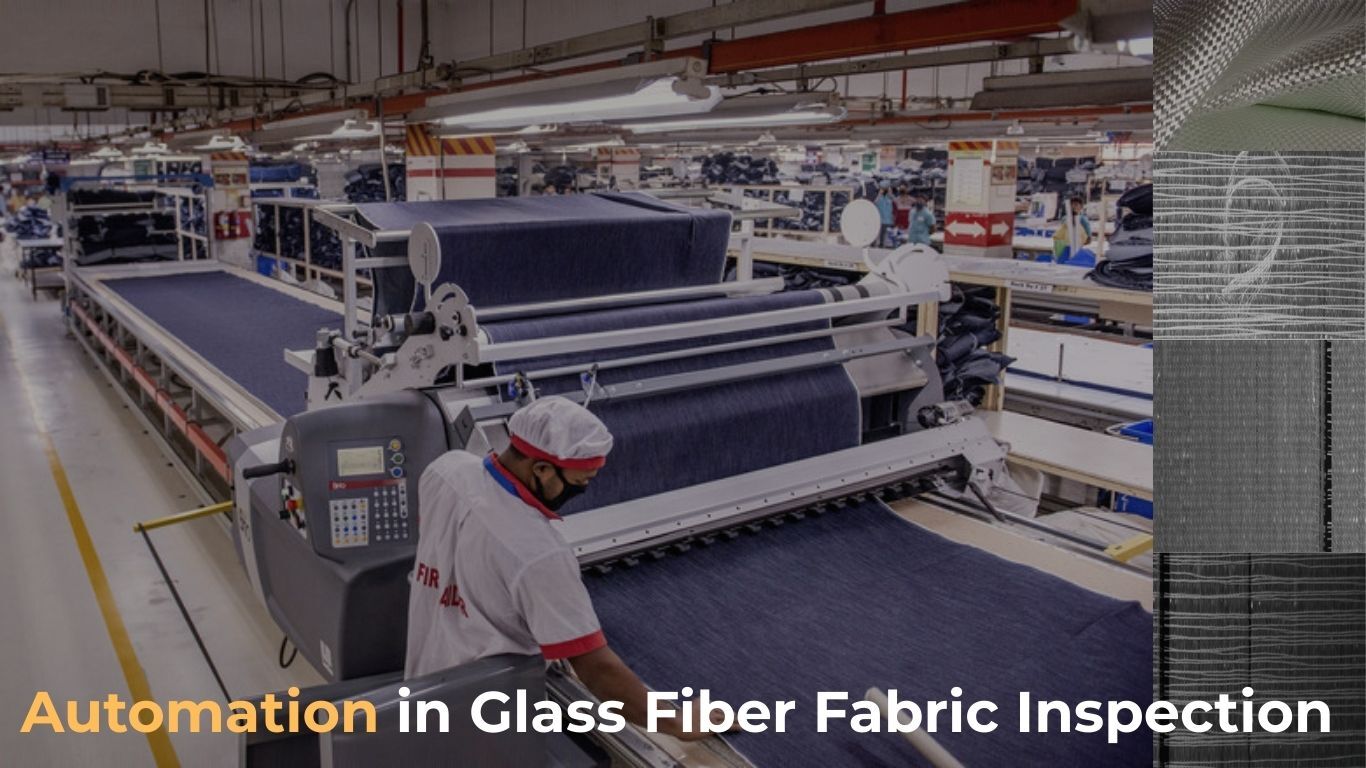
Glass fibre fabric production operates under continuous movement, high tension, and strict quality requirements. In such environments, defects are not exceptions — they are process-driven occurrences. What determines product quality is not the absence of defects, but the ability to identify and control them at the right time.
Automation plays a critical role in making this possible.
The Challenge with Inspecting Glass Fiber Fabrics
Glass fibre fabrics are difficult to inspect using traditional methods. Fine filaments, reflective surfaces, and high production speeds make manual inspection inconsistent and unreliable.
Common challenges include:
Missed micro-defects at high line speeds
Variations in judgement between operators
Delayed detection after fabric winding
Limited ability to trace defects back to their source
As a result, defects are often discovered only during final inspection or composite processing, when the only option left is rejection.
What Automated Inspection Brings to the Process
Automated inspection systems use machine vision and image analysis to monitor glass fibre fabrics directly on the production line.
Instead of sampling or periodic checks, automation provides:
Continuous inspection across the full fabric width
Detection at actual production speed
Consistent decision-making without fatigue
Objective classification of defect types
This ensures defects are identified as they form, not after the fabric has moved to the next stage.
Defects Best Detected Through Automation
Automated inspection systems are particularly effective in identifying glass fibre defects that are difficult to detect consistently through manual inspection, including:
Contamination caused by dust, oil, sizing residue, or foreign particles
Metal contamination introduced through machine wear or handling
Excess roving resulting from improper yarn feed or tension imbalance
Fuzz caused by filament abrasion or breakage
Ply orientation issues affecting fiber alignment and load direction
Stitch miss due to incomplete or broken stitching
Warp miss involving missing or broken warp yarns
Early identification of these defects allows manufacturers to correct process deviations, isolate affected fabric sections, and prevent defect propagation—ensuring the fabric remains usable instead of being rejected.
How Automation Helps Save Fabric, Not Reject It
The key advantage of automated inspection is timing.
When defects are detected early:
Production teams can correct machine parameters immediately
Defect-affected sections can be marked or segregated
Repeat defects can be prevented
Large-scale rejection can be avoided
Automation shifts inspection from a quality checkpoint to a process control tool, helping manufacturers maximize usable output.
Conclusion
Defects in glass fiber fabrics cannot always be avoided, but rejection can.
Automation in the glass fiber fabric inspection process ensures defects are detected at the right stage — when action is still possible. By integrating real-time inspection into production, manufacturers can control quality, reduce waste, and protect high-value fabric from unnecessary rejection.
Automation is not about finding faults.
It is about saving fabric through early visibility.